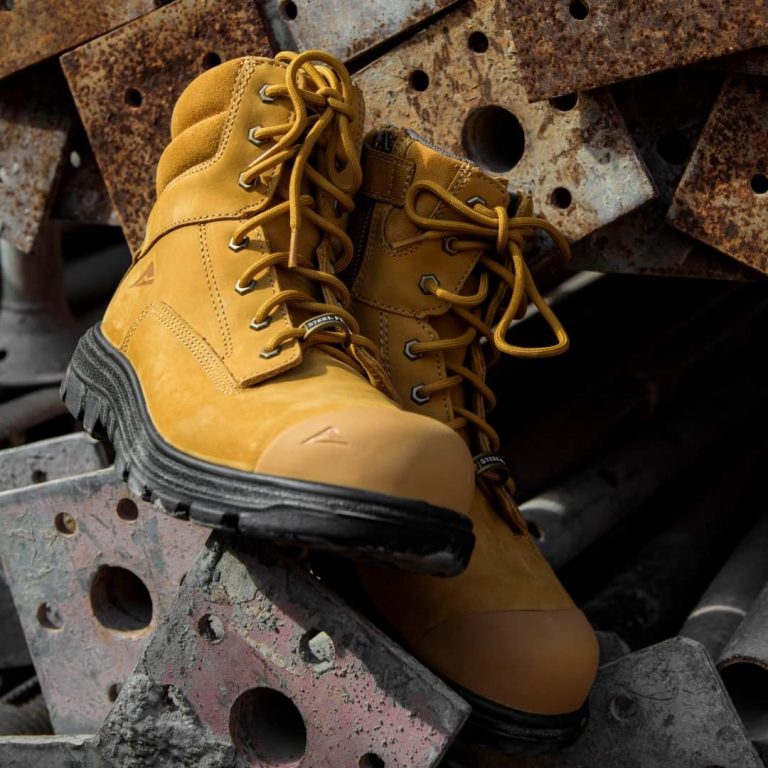
Safety shoes offer protection against a wide range of conditions that includes, slips, trips and falls, sprains, combustible materials, acids, alkalis and other chemicals, sharp objects underfoot penetration, electrical hazards, electrostatic discharge, hot contact or surfaces, molten metal, falling objects, side impact, crushing risks, biohazards, chainsaw resistance and water exposure.
The following attributes are important when selecting safety footwear:
Penetration resistant midsoles should be used where foot injuries may occur as a result of penetration through the sole from nails or sharp objects. This is particularly important in the construction sector.
Safety footwear should provide impact resistance at an energy level of 200 Joules (J), and compression resistance of 15 KN.
Electrically non-conductive footwear should be used to provide additional insulation properties when working with low voltage (50 V -1000 V a.c.).
Antistatic footwear should be used to minimise electrostatic discharge build-up, and therefore avoiding the risk of spark ignition in environments where there are flammable vapours. This is particularly important in the oil and gas sector.
During the life of footwear, electrical resistance can significantly diminish due to flexing, contamination or exposure to moisture, and it is therefore recommended that periodic in-house testing for electrical resistance be undertaken to confirm the shoes continue to provide adequate electrical resistance.